Basic Information
| Field | Details |
|---|---|
| Full name | Prince Albert Screws (often later recorded as “Scruse”) |
| Born | 16 October 1907, Jernigan, Russell County, Alabama, USA |
| Died | 21 January 1997, Midwestern United States |
| Parents | Prince Screws and Julia Belle Jordan (Julia Bell) |
| Spouse | Martha “Mattie” Upshaw (married circa 1929; later divorced) |
| Children | Katherine Esther (Kattie B.) Screws; Hattie Mae |
| Occupations | Track man/railroad worker; cotton farmer; industrial laborer (including work associated with Youngstown Sheet & Tube) |
| Residences | Alabama; East Chicago, Indiana; Gary, Indiana area |
| Known for | Father of Katherine Jackson; maternal grandfather of the Jackson siblings (including Michael and Janet Jackson) |
A name, a place, a path
The story of Prince Albert Screws begins in the red-clay country of Russell County, Alabama, on 16 October 1907. His surname appears across records in a shifting script—Screws on earlier entries, later commonly recorded as Scruse—reflecting the fluid spelling practices of the early 20th century. In family accounts, that evolving name tracks an evolving life: from Southern cotton rows to Midwestern factory floors, from rural poverty to the industrial heartbeat of the Great Migration.
He married Martha “Mattie” Upshaw around 1929, and their daughter Kattie B. Screws—later known as Katherine Esther—was born on 4 May 1930. In accounts that follow the family northward, the surname spelling becomes Scruse around the mid-1930s, mirrored by their move to the Indiana–Illinois industrial belt. The paper trail suggests a familiar American story: a young family seeking steadier wages, steadier seasons, and steadier ground.
From Alabama fields to Midwest steel
Prince Albert Screws is documented in records and family histories as a man who worked with his hands—first in agriculture, then on the rails, and on to heavy industry. “Track man” appears in transcriptions from mid-century censuses, pointing to the punishing, precise work of laying, leveling, and maintaining rail lines that stitched the continent together. Other entries tie him to Youngstown Sheet & Tube and to cotton farming—work as old as the American South and as modern as the Midwestern furnace.
That path matched the geography of opportunity in the 1930s and 1940s. The Great Migration drew millions of Black Southerners to steel mills, rail yards, and factory gates along Lake Michigan. The Screws family name followed that arc into East Chicago and Gary, Indiana—places where the whistle and the time clock set the rhythm of a day.
Family ties: the bridge to the Jacksons
Prince Albert Screws is most widely recognized today through his daughter, Katherine Esther (born Kattie B. Screws), who became the matriarch of the Jackson family. Through Katherine, he stands as the maternal grandfather of Rebbie, Jackie, Tito, Jermaine, La Toya, Marlon, Michael, Randy, Janet, and their siblings—names that would one day travel the globe.
A second daughter, Hattie Mae, also appears in family records, listed alongside Katherine as a sibling. Genealogical compilations commonly identify his parents as Prince Screws and Julia Belle Jordan (Julia Bell), and list siblings such as Richard, Katie, Hattie, and Willie Ann. The details vary across documents, as family histories often do, yet the constellation remains recognizable: Alabama roots, a broad sibling set, and a family pulled northward by work.
Work, names, and the mid-century household
Families are archives of their times, and the Screws household was no exception. Reports indicate that around 1934, the family surname spelling was updated from Screws to Scruse, and Kattie B. became Katherine Esther. Whether driven by clarity, dignity, or simple clerical convenience, the change maps onto a common pattern for the era, when paperwork—draft cards, Social Security records, school enrollment—nudged families toward fixed spellings.
As the 1940s wore on, the job titles attached to Prince Albert’s name sketched a life of physical labor: tie tamping on the rail bed; seasonal farm work; shifts connected to steel manufacturing. It was the kind of labor that left you strong and sore, the sort that could be measured in the weight of iron and the miles of track laid straight.
Children of record
| Child | Birth | Notes |
|---|---|---|
| Katherine Esther (Kattie B.) Screws | 4 May 1930 | Later known as Katherine Jackson; mother of the Jackson siblings |
| Hattie Mae | — | Appears in family listings as Katherine’s sister |
The later years
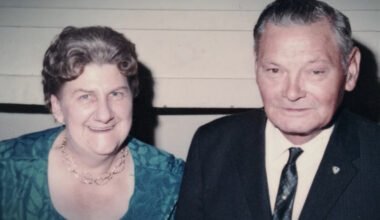
By the middle of the century, the Screws/Scruse family was established in the industrial Midwest. Marital separation followed; Prince Albert and Martha eventually divorced. He lived into the late 20th century, passing away on 21 January 1997. His life, recorded in clipped census lines and worn family photographs, stretches like a rail spur from a small Alabama community to the sprawling grid of the Midwest—unadorned, direct, and essential.
Timeline
| Date | Event |
|---|---|
| 16 Oct 1907 | Birth of Prince Albert Screws in Jernigan, Russell County, Alabama |
| circa 1929 (28 May often cited) | Marriage to Martha “Mattie” Upshaw |
| 4 May 1930 | Birth of daughter Kattie B. Screws (later Katherine Esther) |
| mid-1930s (circa 1934) | Family surname commonly recorded as Scruse; move to East Chicago/Gary area |
| 1930s–1940s | Employment noted as track man/railroad worker; cotton farming; industrial labor |
| mid-20th century | Divorce from Martha Upshaw |
| 21 Jan 1997 | Death in the Midwest, United States |
The broader picture
Seen from a distance, the life of Prince Albert Screws forms a recognizable silhouette: a Southern birth just after the turn of the century; a young marriage and children in the early Depression years; migration north; work defined by steel, rails, and routine; a long life concluding in the Midwest. Yet what sets his story apart is how it threads into one of the most famous American families of the 20th century. The songs, tours, and televised moments that carried the Jackson name into homes worldwide trace back to a household he helped shape, a kitchen he helped keep warm, and a daughter he raised.
Measured in modern celebrity, his profile is modest. Measured in the currency of family—stability, effort, forward motion—it is substantial. People like Prince Albert Screws built the infrastructure of American life, the literal and figurative rails on which other futures traveled.
Name notes and spellings
- Early records commonly show the surname as “Screws.”
- By the mid-1930s, entries often list “Scruse.”
- Both spellings refer to the same family line; the shift reflects common mid-century standardization of names in official records.
Frequently referenced relatives
- Parents: Prince Screws; Julia Belle Jordan (Julia Bell)
- Spouse: Martha “Mattie” Upshaw (later listed as Bridges in some entries)
- Children: Katherine Esther (Kattie B.) Screws; Hattie Mae
- Grandchildren (via Katherine): Rebbie, Jackie, Tito, Jermaine, La Toya, Marlon, Michael, Randy, Janet, and others
FAQ
Who was Prince Albert Screws?
He was an Alabama-born laborer and family man whose life spanned cotton fields, rail lines, and Midwest mills.
Why is he connected to the Jackson family?
He is the father of Katherine Jackson, making him the maternal grandfather of the Jackson siblings, including Michael and Janet.
Did the family surname change?
The surname appears as “Screws” in earlier records and is commonly recorded as “Scruse” from the mid-1930s onward.
Where did he live during his working years?
After early years in Alabama, he lived in the East Chicago–Gary, Indiana area during the mid-20th century.
What kind of work did he do?
Records identify him as a track man/railroad worker, cotton farmer, and industrial laborer connected with steel manufacturing.
When did he pass away?
He died on 21 January 1997 in the Midwestern United States.