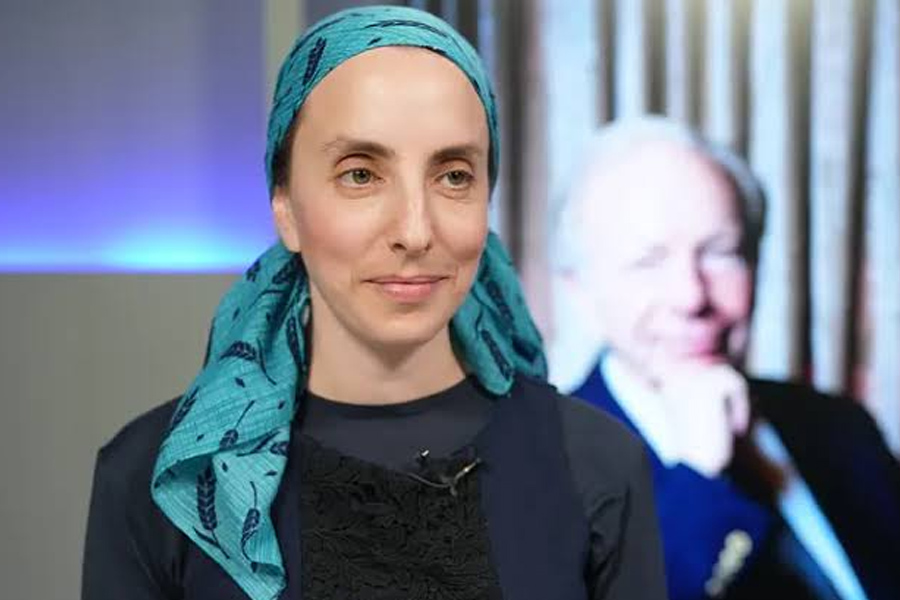
Basic Information About Hani Lieberman
American-born Jewish educator, wife, and mother Hani Lieberman (Hana Lieberman or Hani Rachel Lieberman Lowenstein) prioritized Jewish learning, family, and religion. As the youngest child of late U.S. Senator Joe Lieberman and his second wife, Hadassah Lieberman, public service, Jewish identity, and family traditions impacted her upbringing.
Hani, born in New Haven, Connecticut, in March 1988, spent most of her youth in Washington, D.C., while her Senator father worked. Though from a politically influential family, she chose a private path of study and community service over public office or national politics.
Hani, her husband, and their four sons immigrated to Israel in July 2018. They moved to Jerusalem to fulfilll a longtime dream of living in a religiously significant place.
| Detail | Information |
|---|---|
| Full name | Hani Rachel Lieberman Lowenstein |
| Other names | Hani Lieberman, Hana Lieberman |
| Birth | March 1988 |
| Birthplace | New Haven, Connecticut, United States |
| Father | Joe Lieberman |
| Mother | Hadassah Lieberman |
| Husband | Daniel Lowenstein |
| Children | Six reported children |
| Education | Stern College for Women and Yeshiva University |
| Profession | Jewish educator and community professional |
| Religious background | Observant Orthodox Judaism |
| Residence | Jerusalem, Israel |
| Immigration to Israel | 2018 |
Hani’s story illustrates how a person raised in the center of American political life can choose a quieter direction while remaining deeply connected to family history and public values.
Early Life and Growing Up in the Lieberman Family
Hani was born during an important period in her father’s political career. In early 1988, Joe Lieberman was preparing to launch his first campaign for the U.S. Senate. He subsequently won the election and began representing Connecticut in 1989, beginning a Senate career that lasted until 2013.
Growing up in the Washington area meant that Hani experienced a childhood shaped partly by the demands of public service. Her father’s responsibilities brought him into contact with presidents, political leaders, journalists, and people from many different backgrounds. Yet the family’s Orthodox Jewish traditions remained an important part of its identity.
Jewish education played a central role in Hani’s upbringing. She attended Jewish day school and developed an interest in religious learning at an early age. By high school, she was already thinking about the possibility of moving to Israel.
For Hani, this ambition was more than a geographical preference. It reflected a desire to build a life in a community where Jewish learning, religious observance, and family traditions could form the foundation of daily living.
Her parents supported her aspirations, even though the prospect of living thousands of miles away from their daughter brought understandable emotional challenges. Their encouragement reflected a recurring theme in the family’s story: maintaining close relationships while allowing each generation to make its own choices.
Hani Lieberman’s Parents and Their Influence
Joe Lieberman Her Father
Joe Lieberman, born February 24, 1942, was a Connecticut senator for 24 years. He was a Democratic Party member for most of his career until becoming an independent and remaining active in national politics.
In 2000, he became Al Gore’s presidential running mate, boosting his political profile. Lieberman became the first Jewish vice-presidential candidate of a major American party.
His public career promoted national security, government transparency, and strong US-Israel connections. While in government, he kept Shabbat and other Jewish traditions.
Hani’s upbringing was shaped by these values. Her father showed that religious beliefs and public duties could coexist, even with difficult choices.
Joe was especially proud of Hani’s aliyah. The family’s Jewish identity was continued by her migration to Israel, although father and daughter were further apart.
Fall-related complications killed Joe Lieberman on March 27, 2024. His death devastated Hani and her family. After hearing of his fall, she visited the US and spoke publicly about his ideals, love for Israel, and pride in her life choices.
Hani also eulogized her father. Her statements helped paint a more human picture of the politician, one defined by faith, family, and lasting relationships as well as elections and legislation.
Hadassah Lieberman Her Mother
Hadassah Lieberman, born Hadassah Freilich on March 28, 1948, is an American author and former health relations specialist whose life story spans European Jewish history, immigration, professional achievement, and national politics.
She was born in Prague, Czechoslovakia, to parents who had survived the Holocaust. Her father, Samuel Freilich, was a lawyer and rabbi who endured forced labor, while her mother, Ella Freilich, survived Auschwitz and Dachau.
The family immigrated to the United States in 1949 and settled in Gardner, Massachusetts. Hadassah grew up in a traditional Jewish household, learning to navigate American society while preserving the cultural memory and religious traditions of her family.
Her professional career included positions connected to financial services, pharmaceuticals, health communications, and education. She worked with organizations including Lehman Brothers, Pfizer, and the National Research Council, later taking on nonprofit advocacy and consulting responsibilities.
Hadassah also played a visible role in Joe Lieberman’s political career. During the 2000 vice-presidential campaign, she traveled extensively, addressed public audiences, and helped introduce voters to the personal side of her husband.
In 2021, she published Hadassah: An American Story, a memoir exploring her family’s Holocaust experiences, immigration, professional life, marriages, motherhood, and years in American public life.
For Hani, her mother’s history represents a powerful connection between personal identity and historical memory. The experiences of her maternal grandparents, their survival, and their eventual settlement in America form part of the inheritance that helped shape Hani’s relationship with Judaism and Israel.
Hani Lieberman’s Siblings and Blended Family
Hani belongs to a blended family that brings together children from both of her parents’ earlier marriages. This extended family has maintained connections across generations, professions, and countries.
Matthew Lieberman
Matthew, commonly known as Matt Lieberman, is Hani’s older paternal half-brother. He is the son of Joe Lieberman and his first wife, Betty Haas.
Matt attended Yale University and Yale Law School and later worked in Jewish education. He served as head of school at Greenfield Hebrew Academy in Atlanta, Georgia, bringing educational leadership into a family already associated with public service.
In 2020, he ran unsuccessfully in the special election for a U.S. Senate seat in Georgia. His campaign reflected a direct engagement with the political world that had defined much of his father’s professional life.
Matt’s combination of legal training, educational leadership, and political involvement illustrates the range of paths taken by Joe Lieberman’s children.
Rebecca Lieberman
Rebecca Lieberman is Hani’s older paternal half-sister, also born during Joe Lieberman’s first marriage.
She attended Barnard College and the University of Pennsylvania Law School. Her educational background and professional life reflect the family’s emphasis on intellectual development and achievement.
Rebecca has also spoken publicly about her father’s legacy. Like her siblings, she experienced Joe not only as a political figure but as a parent whose religious commitments and personal principles influenced family life.
Although Hani lives in Israel and her older siblings have their own lives in the United States, their shared connection to Joe and the broader Lieberman family remains an important bond.
Ethan Tucker
Ethan Tucker is Hani’s maternal half-brother from Hadassah Lieberman’s first marriage to Rabbi Gordon Tucker.
A graduate of Harvard College, Ethan pursued advanced Jewish learning and received rabbinic ordination from Israel’s Chief Rabbinate. He later became involved in Jewish education and leadership, including work associated with Hadar, an institution devoted to Jewish learning and communal life.
Ethan’s professional interests overlap with Hani’s commitment to Jewish education. Both have chosen careers that place religious learning and community engagement at the center of their work.
Their connection also links two sides of the family through a shared interest in Jewish tradition, scholarship, and contemporary religious life.
Hani Lieberman’s Husband Daniel Lowenstein
Hani is married to Daniel Lowenstein, who is described as both a rabbi and a psychiatrist. Their relationship developed around shared religious commitments and a common aspiration to build a life in Israel.
The couple had discussed making aliyah since they were dating. Their decision was therefore not an abrupt change but the realization of a goal that had become part of their shared vision for the future.
Daniel completed his psychiatric residency around the period of their 2018 move. Balancing professional development, religious responsibilities, and the needs of a growing family required careful planning.
Their partnership reflects a combination of intellectual interests, religious commitment, and family priorities. Daniel’s work in psychiatry and rabbinic life complements Hani’s involvement in Jewish education, creating a household in which both professional and spiritual responsibilities have an important place.
The move to Israel also demonstrated their willingness to reorganize their lives around their convictions. Leaving established routines and professional networks in the United States meant accepting uncertainty in exchange for a future they believed would better reflect their shared values.
Hani Lieberman’s Children and Life as a Mother
Motherhood is one of the defining parts of Hani’s life. When she and Daniel moved to Israel in July 2018, they brought four young sons with them. Contemporary accounts described the children as approximately seven, six, four, and two years old.
Some reports identified the boys as Akiva, Binyamin, Meir, and Avraham Shmuel. As the family grew, later accounts indicated that Hani and Daniel had six children in total, including a daughter who was approximately a year and a half old in spring 2024.
Because the family maintains a relatively private life, not every detail about the children has been consistently documented in public. Their parents have generally kept the focus on family life rather than turning their children into public personalities.
Raising six children while maintaining professional and religious responsibilities requires considerable coordination. Living in Jerusalem adds another dimension, allowing the family to participate in a community where Jewish holidays, educational traditions, and religious observance are woven into everyday life.
Hani’s experience of motherhood also connects her to earlier generations. Her parents built a family while navigating demanding careers and public responsibilities. Her grandparents rebuilt their lives after the Holocaust and immigration. In her own household, Hani continues this story by raising children in a setting closely connected to Jewish history and tradition.
Education and Professional Career in Jewish Learning
Hani pursued formal education that prepared her for work in Jewish studies, teaching, and community development.
She earned a Bachelor of Arts through the honors program at Stern College for Women, part of Yeshiva University. Her studies focused on Judaic Studies, with a minor in Psychology. She subsequently received a master’s degree in Modern Jewish History from Yeshiva University’s Bernard Revel Graduate School.
Her additional studies included programs at Nishmat, Michlalah, and the Gruss Midrashiya. She also received certification from Machon Puah as a yoetzet l’refuah v’halacha, an adviser on Jewish law as it relates to fertility and medical issues.
These qualifications reflect an educational path that combines traditional Jewish learning with academic study and practical guidance.
Work With the Orthodox Union
Hani works for OU-JLIC, the Orthodox Union’s Jewish Learning Initiative on Campus. She was associate director of community projects and worked in student leadership and educational resources.
The initiative promotes Jewish education and religion on college campuses. It can provide educational programming, student mentorship, community building, and chances for Orthodox students to continue significant Jewish traditions at university.
Hani has created instructional resources, organized Israel-related programs, written a guide for wedding instructors, and supported student leadership Shabbatons. She has also helped women and students at various ages learn over winter vacation.
Her work shows she understands Jewish education outside the classroom. A well-designed program can connect formal learning, personal identity, and community.
Hani resumed part-time studies and OU Life writing in Israel. Her career has supported her religious group without the focus of national politics.
The 2018 Aliyah and Hani’s New Life in Jerusalem
In July 2018, Hani and Daniel made aliyah with their four sons on a Nefesh B’Nefesh charter flight carrying approximately 230 North American immigrants to Israel.
Her parents attended the family’s departure at John F. Kennedy International Airport. Their presence symbolized both their support and the emotional complexity of watching a daughter establish her home across the ocean.
The move represented a significant turning point. Hani was leaving the country where she had been born and raised, where her parents and siblings lived, and where she had developed her professional relationships.
Israel offered a different rhythm of life, with Jewish holidays and religious observance forming a visible part of the public calendar. Jerusalem, in particular, provided a setting in which family life, community participation, and religious learning could reinforce one another.
The move also transformed the practical meaning of family closeness. Visits required more planning, and ordinary gatherings became less frequent. Technology helped the family maintain contact, but distance could not entirely replace sharing everyday moments in person.
Joe and Hadassah publicly expressed pride in their daughter’s decision while acknowledging the sadness of having her so far away. Their response reflected a familiar tension in immigrant families: the desire to remain close alongside the recognition that a child may find a sense of belonging somewhere else.
For Hani, aliyah was not simply a relocation. It was a decision to build her family’s future around a deeply held aspiration.
Hani Lieberman After Her Father’s Death in 2024
After Joe Lieberman’s death on March 27, 2024, Hani became public amid her mourning.
She spoke about her father’s love for Israel and his delight in her aliyah. Her observations highlighted his lifelong beliefs, particularly religious practice, personal integrity, and societal duty.
Hani took her small daughter to the US after learning of her father’s fall. The journey showed the value of family even when distance and daily life made immediate travel impractical.
She gave a eulogy and attended memorial services, including ones in Israel, for her father. She spoke at Legacy of Light, a London Chabad event, about the Lubavitcher Rebbe’s effect on Joe Lieberman in 2024.
These appearances revealed Hani’s voice. She focused on her father’s principles and family bonds rather than his political accomplishments.
Her insights showed that generational relationships continue beyond death. After a parent dies, family stories, religious beliefs, and recollections can lead children.
Hani Lieberman’s Net Worth and Financial Background
There is no reliable, comprehensive public estimate of Hani Lieberman’s personal net worth. She has not developed a public business profile, and her professional work has primarily involved Jewish education and community projects rather than high-profile commercial ventures.
Her father’s long political career and her mother’s work in health communications and nonprofit advocacy brought the family into prominent professional and social circles. However, those connections do not establish Hani’s personal financial position.
Without verified information about her income, assets, investments, or household finances, assigning a specific net worth would be speculative.
Her public profile instead centers on education, family, religious life, and community participation. This relatively private approach is consistent with her broader decision to build a life outside the political spotlight.
Frequently Asked Questions About Hani Lieberman
Who is Hani Lieberman?
Hani Lieberman, also known as Hani Rachel Lieberman Lowenstein, is a Jewish educator and the youngest child of former U.S. Senator Joe Lieberman and Hadassah Lieberman. She moved to Israel with her husband and children in 2018.
How old is Hani Lieberman?
Hani was born in March 1988. As of October 2026, she is 38 years old.
Who are Hani Lieberman’s parents?
Her parents are Joe Lieberman, the former U.S. senator and 2000 Democratic vice-presidential nominee, and Hadassah Lieberman, an author and former health relations specialist.
Who is Hani Lieberman’s husband?
Hani is married to Daniel Lowenstein, who is described as a rabbi and psychiatrist. The couple shared a longstanding aspiration to move to Israel.
How many children does Hani Lieberman have?
Hani and Daniel Lowenstein are reported to have six children. They moved to Israel in 2018 with four young sons and later expanded their family.
Where does Hani Lieberman live?
Hani lives in Jerusalem, Israel, where she moved with her husband and children after making aliyah in July 2018.
What does Hani Lieberman do for a living?
Hani works in Jewish education and community development. Her professional experience includes educational resources, student leadership programming, and community projects associated with the Orthodox Union’s Jewish Learning Initiative on Campus.
What is Hani Lieberman’s educational background?
She earned a bachelor’s degree in Judaic Studies from Stern College for Women and a master’s degree in Modern Jewish History from Yeshiva University’s Bernard Revel Graduate School. She also pursued additional Jewish studies and received certification as an adviser on Jewish law related to fertility and medical issues.
Who are Hani Lieberman’s siblings?
Her siblings and half-siblings include Matthew Lieberman and Rebecca Lieberman, her father’s children from his first marriage, and Ethan Tucker, her mother’s son from her first marriage to Rabbi Gordon Tucker.
Why did Hani Lieberman move to Israel?
Hani and her husband had discussed making aliyah since their dating years. Their decision reflected their religious commitments, connection to Jewish history, and desire to raise their family in Israel.
What happened to Joe Lieberman in 2024?
Joe Lieberman died on March 27, 2024, from complications of a fall. Hani honored his memory through a eulogy and public reflections on his faith, his connection to Israel, and his influence on the family.
What is Hani Lieberman’s net worth?
Hani Lieberman’s net worth has not been reliably established in public information. Her professional activities have centered on Jewish education and community work, and there is insufficient verified information to provide a specific financial estimate.