Basic Information About Jackie Butch Jenkins
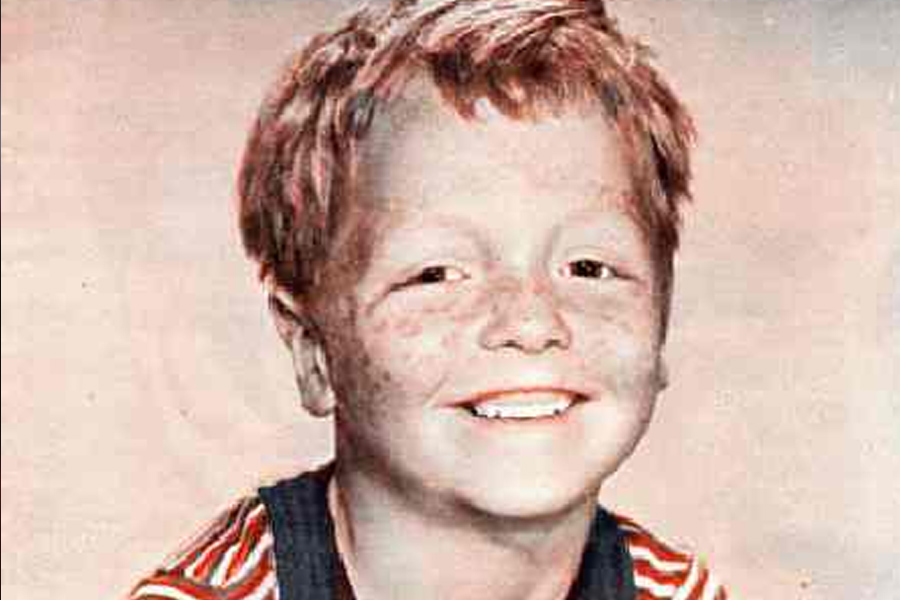
Jackie “Butch” Jenkins, born Jack Dudley Jenkins on August 29, 1937, was an American child actor who became a familiar face in Metro-Goldwyn-Mayer films during the 1940s. Known for his freckles, tousled hair, prominent front teeth, and lively screen presence, he brought a refreshing naturalness to Hollywood productions during the golden age of studio filmmaking. His career was brief, but his performances left a lasting impression on classic movie audiences.
Unlike many performers who spend their entire lives chasing the spotlight, Jenkins chose a different road. After appearing in numerous films as a child, he stepped away from acting while still young and built a private adult life centered on family, business, and outdoor pursuits. His story is particularly interesting because his early success did not become the defining feature of his later years.
| Category | Details |
|---|---|
| Full name | Jack Dudley Jenkins |
| Popular name | Jackie “Butch” Jenkins |
| Date of birth | August 29, 1937 |
| Place of birth | Los Angeles, California, United States |
| Nationality | American |
| Profession | Former child actor, businessman |
| Mother | Doris Dudley |
| Father | Jack E. Jenkins |
| Half brother | Theodore “Ted” Dudley Kurrus |
| Known spouse | Glenda Larue Birmingham, according to biographical listings |
| Other reported spouse name | Gloria |
| Active acting years | 1943 to 1948 |
| Notable films | The Human Comedy, National Velvet, Our Vines Have Tender Grapes, Boys’ Ranch |
| Adult business interests | Water supply operations and car wash businesses |
| Date of death | August 14, 2001 |
| Place of death | Asheville, North Carolina, United States |
The Early Life of Jackie Butch Jenkins
Jackie Jenkins was born on August 29, 1937, into a family that already had connections to the entertainment world. His mother, Doris Dudley, had experience as an actress, while his father, Jack E. Jenkins, was associated with restaurant operations and was described in some accounts as having aviation connections.
Jenkins spent his earliest years in a period when Hollywood studios were powerful institutions capable of turning ordinary children into recognizable screen personalities. The major studios maintained talent departments, organized acting opportunities, and often controlled the professional lives of young performers. For a child with an expressive face and abundant energy, the movie business could open doors that would otherwise remain closed.
His opportunity arrived when he was approximately six years old. According to his biographical accounts, an MGM talent scout noticed him playing on a beach in Santa Monica. The scout was attracted to his spirited personality rather than a polished, conventional child-star appearance.
That encounter changed the direction of Jenkins’s childhood. He entered a world of film sets, cameras, studio classrooms, and professional actors. Yet his later life demonstrated that a promising beginning in Hollywood did not necessarily mean a lifelong commitment to entertainment.
His Mother Doris Dudley and Her Influence
One of Jenkins’s biggest influences was Doris Dudley. With theater experience and limited film parts, she appeared in A Woman Rebels and The Moon and Sixpence. She was the daughter of drama critic and dramatist Bide Dudley.
Dudley was colorful and adventurous as a child. One famous story has her piloting an airplane without a license to a theater opening. She worked in Texas real estate and became known for caring for stray dogs after starting in the performing arts.
Her relationship with her kid deepened when he started having acting problems. Jenkins’ youth career caused a nervous stutter. Acting and working in a tough studio atmosphere were often blamed for his retirement.
Dudley encouraged him to leave Hollywood and pursue a career outside the screen. Jenkins later thanked her for saving him from a vocation he never wanted to pursue as an adult.
I find this really telling about his biography. Dudley’s role was distinct from Hollywood’s celebration of parents who help their children succeed. She taught her son that quitting can be as beneficial as succeeding.
Doris Dudley Jenkins died of bone cancer in Greenville, Texas, on August 14, 1985. She was crucial to understanding her son’s upbringing since she balanced acting, family, business, and animal welfare.
His Father Jack E Jenkins and Family Background
Jack E. Jenkins was Jackie Butch Jenkins’s father. He married Doris Dudley in Yuma, Arizona, in December 1936, several months before their son was born.
His professional background was associated with restaurant operations, and some historical descriptions also connected him with aviation or the Army ferry command. However, detailed information about his personal life and career remains limited.
The marriage between Jack E. Jenkins and Doris Dudley appears to have experienced significant changes over the years. Biographical accounts refer to divorce proceedings and the possibility of a remarriage before a final separation around 1959. The exact sequence is not consistently documented.
Jackie’s childhood therefore unfolded within a family whose relationships were more complicated than a simple account of two parents and one child might suggest. Nevertheless, his mother’s influence is much more clearly described in the surviving accounts of his life.
His Half Brother Theodore Ted Dudley Kurrus
Jenkins had an older maternal half brother, Theodore “Ted” Dudley Kurrus, born on October 20, 1933. Ted was the son of Doris Dudley and her first husband, engineer Theodore Kurrus.
Doris’s first marriage was annulled in 1936, before her marriage to Jack E. Jenkins. As a result, Ted and Jackie shared their mother but had different fathers.
Ted later lived in Honolulu, Hawaii. When Doris Dudley died in 1985, surviving-family notices identified Ted Kurrus of Honolulu and Jack Jenkins of Asheville, North Carolina, among her sons.
Although Ted did not share Jackie’s Hollywood career, his place in the family provides a clearer picture of the household and relationships surrounding the former child actor. The brothers’ adult lives took different paths, and relatively little public information is available about their private relationship.
Jackie Butch Jenkins and His Hollywood Career
Jenkins’s acting career lasted approximately five years, from 1943 through 1948. During that period, he appeared in a succession of MGM productions and worked alongside established performers and other young actors.
His greatest strength was his natural screen presence. He did not fit the perfectly polished image often associated with child stars. Instead, his freckles, gap between his teeth, unruly hair, and energetic expressions gave him an approachable quality.
His Film Debut in The Human Comedy
Jenkins made his film debut in The Human Comedy in 1943, playing Ulysses Macauley, the younger brother of a character portrayed by Mickey Rooney.
The film introduced audiences to the qualities that would define his screen persona. Jenkins could convey youthful curiosity and mischievous energy without making his performance feel overly rehearsed. His appearance in the film attracted attention, with some contemporary reactions suggesting that he nearly stole scenes from more established performers.
For a six-year-old, the production represented an extraordinary introduction to professional filmmaking. It also placed him among the young performers whose work helped studios portray childhood and family life during the 1940s.
His Role in National Velvet
In 1944, Jenkins appeared in National Velvet, the celebrated film starring Elizabeth Taylor and Mickey Rooney. He played Donald Brown, the younger brother of Taylor’s character, Velvet Brown.
The film became an enduring classic, and Jenkins’s appearance connected him to one of the best-known family dramas of its era. Working alongside Taylor also placed him within a group of young performers who would become associated with MGM’s studio system.
He also appeared in An American Romance in 1944, although his contribution was uncredited.
Our Vines Have Tender Grapes and Other Important Roles
In 1945, Jenkins played Arnold Hanson in Our Vines Have Tender Grapes, appearing alongside Margaret O’Brien and Edward G. Robinson. The film’s rural family setting suited his ability to portray ordinary childhood experiences with warmth and spontaneity.
His career gained further momentum in 1946, when he received star billing as Butch in Boys’ Ranch. The film was promoted in connection with the popular appeal of Boys Town, and the role helped establish his nickname as a recognizable part of his screen identity.
That year, he also appeared in Little Mister Jim. Other major credits included My Brother Talks to Horses in 1947 and Summer Holiday, The Bride Goes Wild, and Big City in 1948.
His career also included smaller or uncredited appearances, such as Abbott and Costello in Hollywood.
Theater exhibitors voted Jenkins the second-most promising “star of tomorrow” in 1946. The recognition reflected his popularity at a time when the industry was continually searching for young performers capable of connecting with audiences.
Why Jackie Butch Jenkins Left Acting
Jenkins’s retirement was not the result of a lack of early success. By the time he left Hollywood, he had accumulated a substantial list of credits and had been recognized as a promising young performer.
The main reason associated with his departure was a nervous stutter that persisted into adulthood. Accounts of his life connect the problem, at least in part, with the pressure of working as a child actor.
His mother helped him leave the industry when he was approximately eleven years old. The decision ended a career that might otherwise have continued into adolescence.
Jenkins did not appear to regard his departure as a personal failure. He expressed appreciation for his early experiences while making it clear that he had never expected to spend his entire life making movies. He also declined later opportunities to return to acting.
His story offers a useful reminder that early talent does not determine an entire lifetime. Some children flourish in public, while others need the freedom to discover their identities outside the expectations attached to fame.
Jackie Butch Jenkins’s Marriage and Wife
Jenkins’ marriage and personal life after Hollywood are not well recorded.
His marriage to Glenda Larue Birmingham began on March 3, 1967, and lasted until his 2001 death. Gloria, his third wife, lived with him in his North Carolina mountain house, according to other accounts.
Gloria and Glenda Larue Birmingham may have been the same person, used one name unofficially, or married separately. An explanation is lacking from the available information.
Jenkins developed a family outside the entertainment industry, which is consistent. After having a wife and children, he focused on domestic stability rather than public appearances.
His ideal life included a lake, cows, a wife, and children. The remark expressed a yearning for simplicity in contrast to Hollywood’s dazzling lights.
His Children and Family Life Away From Hollywood
Jenkins reportedly had several children, although reliable public accounts do not consistently identify them by name or provide detailed biographies.
The limited information is consistent with the way he approached adulthood. Rather than using his former fame to establish a public family identity, he kept his household largely outside the media’s reach.
His children grew up with a father whose childhood experiences had been unusually public but whose adult priorities were different. Jenkins had worked with major film stars, received studio recognition, and appeared in films that remained familiar to later generations. Yet these accomplishments did not become the centerpiece of his family life.
He seems to have preferred the role of a private father and businessman to that of a former celebrity continually revisiting his childhood.
That distinction matters when examining his legacy. The absence of extensive information about his children should not be mistaken for an absence of family connections. It simply reflects the limits of what has been made public.
His Adult Business Career and Financial Success
One of the most striking elements of Jenkins’s life was his financial transition from child performer to businessman.
His childhood earnings were reportedly invested carefully, allowing him to become financially independent by his thirties. Although exact account balances and investment records are not publicly established, his early income appears to have provided a useful foundation for his adult activities.
Rather than returning to Hollywood, he developed business interests in Texas.
East Texas Water System
Jenkins was associated with the supervision of the East Texas Water System. The work represented a substantial departure from film production, requiring attention to practical operations rather than performance and public recognition.
Water supply operations are rooted in everyday needs. They depend on reliable infrastructure, organization, and the ability to keep essential services running. His involvement in this sector illustrates how thoroughly his adult professional identity differed from his childhood occupation.
Some secondary biographical accounts also associate him with a water supply firm in the Wills Point, Texas, area. The exact ownership structure and scale of the operation are not clearly established.
Car Wash Businesses
Jenkins also reportedly owned and operated a chain of car wash outlets. These businesses provided another source of income and reflected his interest in practical commercial ventures.
Unlike acting, which depends heavily on public visibility and opportunities offered by studios, operating a business can allow someone to build a career without becoming a public personality. Jenkins appears to have embraced that distinction.
His reported financial independence was therefore based on a combination of childhood earnings and later business activities. However, there is no reliable public figure establishing his precise net worth at the time of his death.
Any specific dollar estimate would be speculative. His biography supports the broader description of a financially successful former actor, but it does not provide enough information to calculate his assets, liabilities, property holdings, or investment portfolio.
His Move to North Carolina and Final Years
Jenkins lived for many years in the Dallas area of Texas, where he pursued his business interests and family life. During the late 1970s, he moved to western North Carolina.
There, he built a home on the side of a steep mountain and embraced a quieter lifestyle. Accounts describe him as a businessman and outdoorsman, a combination that captures his preference for practical work and time away from the public eye.
The move represented a clear break from the Hollywood environment of his childhood. He had traded studio lots and film sets for mountain scenery, private domestic life, and business responsibilities.
Jenkins died in his sleep in Asheville, North Carolina, on August 14, 2001. He was 63 years old, just fifteen days short of his sixty-fourth birthday.
His mother had died on the same calendar date in 1985, exactly sixteen years earlier. The coincidence connects two important dates in the family’s history, although no particular meaning can be inferred from it.
Jenkins was cremated, and his ashes were returned to his family. His death marked the end of a life that had moved through two markedly different worlds: the public spectacle of 1940s Hollywood and the relative anonymity of private business.
Jackie Butch Jenkins’s Legacy in Classic Film History
Jenkins stands out among Hollywood’s child stars. His tiny yet distinct filmography captures MGM and other studios’ influence on American popular entertainment.
While The Human Comedy exposed him to audiences, National Velvet presented him to a classic that reached new generations. He could switch between family dramas, comedies, and young-character storylines in his other parts.
However, his legacy goes beyond acting. He also represents a less-discussed path for former child stars: leaving the industry early, finding work outside entertainment, and maintaining privacy.
He didn’t try to regain fame in his final years. Instead, his business success and private family life suggest he found happiness in quieter achievement.
His is not a narrative of a failed performer. It’s about a person who succeeded, struggled, and redefined success.
Frequently Asked Questions About Jackie Butch Jenkins
Who was Jackie Butch Jenkins?
Jackie “Butch” Jenkins was an American child actor born on August 29, 1937. He became known for his roles in MGM films during the 1940s, including The Human Comedy, National Velvet, and Boys’ Ranch. He retired from acting around 1948 and later pursued business interests in Texas.
Who were Jackie Butch Jenkins’s parents?
His parents were Doris Dudley and Jack E. Jenkins. His mother was an actress who later became a real estate developer in Texas. His father was associated with restaurant operations and was also described in some accounts as having aviation connections.
Did Jackie Butch Jenkins have any siblings?
Yes. He had an older maternal half brother named Theodore “Ted” Dudley Kurrus, born on October 20, 1933. Ted was the son of Doris Dudley and her first husband, Theodore Kurrus, and later lived in Honolulu, Hawaii.
Who was Jackie Butch Jenkins’s wife?
Biographical listings identify Glenda Larue Birmingham as his wife, with a marriage date of March 3, 1967. Other accounts refer to a third wife named Gloria. The available information does not conclusively establish whether these names refer to the same person or separate marriages.
Did Jackie Butch Jenkins have children?
Yes, accounts indicate that he had children. However, their names and individual biographies are not consistently documented in public sources. Jenkins maintained a private family life after leaving Hollywood.
Why did Jackie Butch Jenkins stop acting?
He retired from acting around the age of eleven after developing a persistent nervous stutter. His mother supported his departure from Hollywood, and Jenkins later expressed gratitude for her decision. He did not pursue a sustained return to acting as an adult.
What were Jackie Butch Jenkins’s most famous movies?
His best-known films include The Human Comedy in 1943, National Velvet in 1944, Our Vines Have Tender Grapes in 1945, and Boys’ Ranch in 1946. His later films included My Brother Talks to Horses, Summer Holiday, The Bride Goes Wild, and Big City.
What did Jackie Butch Jenkins do after Hollywood?
He pursued business activities in Texas, reportedly supervising the East Texas Water System and operating a chain of car wash outlets. He also focused on family life and outdoor interests, eventually moving to North Carolina in the late 1970s.
What was Jackie Butch Jenkins’s net worth?
His exact net worth is unknown. Accounts indicate that his childhood earnings were invested and helped make him financially independent by his thirties. His subsequent business ventures provided additional income, but no reliable public financial disclosure establishes a specific figure.
When and where did Jackie Butch Jenkins die?
He died in his sleep on August 14, 2001, in Asheville, North Carolina, at the age of 63. He was cremated, and his ashes were returned to his family.
What is Jackie Butch Jenkins remembered for today?
He is remembered for his energetic performances in classic MGM films and for leaving Hollywood while still a child. His later success in business and his commitment to a private life distinguish his story from the more familiar narratives of former child stars who remained in the entertainment industry.