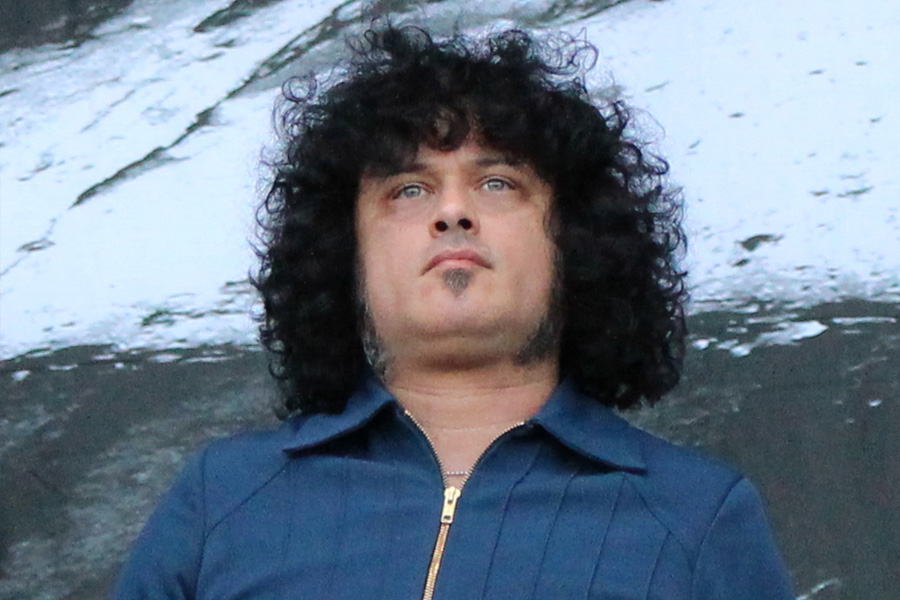
Basic Information
| Field | Details |
|---|---|
| Full name | Cedric Bixler-Zavala |
| Known as | Cedric Zavala |
| Born | 1974 |
| Birthplace | Redwood City, California |
| Raised in | El Paso, Texas |
| Occupation | Singer, songwriter, musician |
| Best known for | At the Drive-In, The Mars Volta |
| Spouse | Chrissie Carnell Bixler |
| Children | Ulysses, Xanthus |
| Major award | Grammy winner |
| Notable themes | Identity, family, language, pressure, art, survival |
A Voice Cut from Fire and Color
I see Cedric Zavala as one of those artists whose life feels larger than biography alone. His story is not just about bands, records, or awards. It is about movement, inheritance, and the way family can shape a person’s voice before the world ever hears it. He was born in 1974 in Redwood City, California, and grew up in El Paso, Texas, a border city where languages, cultures, and identities overlap like light through stained glass. That setting matters. It gave him a texture, a rhythm, and a point of view that later exploded through his music.
He became known first as a punk and post-hardcore singer, then as a wild, magnetic frontman, then as a songwriter with an uncommon sense for imagery. His lyrics often feel like they are being pulled from a storm. He does not simply write lines. He builds pressure, then lets the words crack open. That is part of why his music lasts.
Family Roots and Personal Identity
Cedric Zavala’s family background is central to understanding him. His father, Dennis Bixler-Marquez, worked as a teacher of Chicano Studies at the University of Texas at El Paso. His mother, Rosa Zavala, is Mexican-American and tied deeply to the El Paso world that shaped Cedric’s early life. That mix of academic discipline and cultural identity gave him more than a childhood. It gave him a vocabulary for being in between worlds.
I think that is one of the key reasons his work feels so alive. He grew up with language as a living thing, not a fixed rulebook. English, Spanish, and Spanglish were not decorative elements. They were part of the air. His family environment helped him understand that identity is not a neat box. It is a moving target, a river that keeps finding new channels.
The family influence also appears in how Cedric talks about art and belonging. He has often come across as someone who understands the gravity of ancestry, even when his music feels chaotic on the surface. That tension gives his work depth. It keeps the shouting from becoming noise and the poetry from becoming perfume.
Spouse and Marriage
Cedric Zavala married Chrissie Carnell Bixler in 2009. Their relationship has been public, visible, and closely tied to the difficult terrain of Hollywood, faith communities, and media attention. Chrissie is more than a footnote in his life story. She is a major personal presence and a stabilizing force in a life that has often been lived at high volume.
I read their marriage as part shelter, part partnership, part shared front line. Public life can be a furnace. It heats everything, distorts everything, and forces private matters into public view. Yet Cedric and Chrissie’s relationship has remained a defining part of his adult life. It is one of the clearest examples of how his personal world has influenced his creative one.
Their bond also connects to his later work, especially the softer and more reflective material that emerged after years of louder, harsher, more chaotic music. Marriage did not erase his edge. It gave it shape.
Children and Fatherhood
Cedric Zavala has two sons, Ulysses and Xanthus, born in 2013. Fatherhood appears to have altered him in visible ways. It did not make him less intense. It made him more focused. It forced time to matter. It introduced a new center of gravity.
The names themselves carry a kind of mythic sound, and that feels fitting for a family attached to an artist whose work often reaches for the surreal. But beneath the strangeness is something simple and human. Children change a person’s scale. They make the world feel both smaller and larger. Smaller because the hours become concrete. Larger because the future now has a face.
I think the arrival of Ulysses and Xanthus helped push Cedric toward more intimate thinking in some of his later writing. He seemed less interested in performing chaos for its own sake and more interested in channeling feeling with purpose. Fatherhood can do that. It can turn a wildfire into a forge.
Career Path and Major Achievements
El Paso punk started Cedric Zavala’s career. In 1994, he co-founded At the Drive-In, a post-hardcore pioneer. Their sound was intense and powerful. Feeling like a match in a closed room. Cedric’s voice was a howl, sermon, and extradimensional communication.
Eventually, he and Omar Rodríguez-López formed The Mars Volta, a band that pushed rock to new heights. He went from fast to dense, experimental architecture with the project. These songs were longer, weirder, and more ambitious. They sounded like gloomy cities.
He worked on De Facto, Antemasque, Anywhere, and Zavalaz. That range counts. A moving musician is seen. He alters shapes like water turns containers. He can be fierce, thoughtful, playful, or wounded. Constant commitment.
One of his greatest accomplishments was winning a Grammy for “Wax Simulacra.” Awards tell only part of the tale. His real accomplishment is impact. He defined a style of singing and writing that is emotive, poetic, and intense without being hollow.
Net Worth and Public Profile
Cedric Zavala’s net worth is usually estimated in the millions, but public estimates vary and should be treated as rough figures rather than hard fact. That kind of uncertainty is common for musicians whose careers are spread across bands, tours, records, and side projects.
What is clearer is his cultural value. He is not just a working artist. He is a figure who has remained relevant across decades by refusing to flatten himself. Even when the market changes, he keeps the same sharp interior weather. That is rare. Many artists fade into imitation. Cedric keeps mutating.
Recent Mentions and Visibility
Cedric Zavala has appeared in contemporary conversations about music, public controversy, documentaries, and social media. Due to his activity, opinions, and involvement in current events, his name persists. He’s not relic. He remains in the room, speaks, and draws lines in the sand as necessary.
Maintaining visibility prevents his story from becoming nostalgia. Currently, he is an artist. For a veteran musician, that’s big.
Extended Timeline
1974
Cedric Zavala is born in Redwood City, California.
Childhood and Teen Years
He grows up in El Paso, Texas, in a bilingual, culturally rich environment that shapes his sense of identity and language.
1994
He co-founds At the Drive-In, beginning the climb that will make him one of the most recognizable voices in alternative rock.
Late 1990s
He expands his work through projects such as De Facto, showing a wider musical appetite beyond punk and hardcore.
2001
He forms The Mars Volta with Omar Rodríguez-López after At the Drive-In ends.
2009
He wins a Grammy for “Wax Simulacra.”
2009
He marries Chrissie Carnell Bixler.
2013
His twin sons, Ulysses and Xanthus, are born.
2010s
He continues recording and performing through multiple projects, including reunion work with At the Drive-In.
2020s
He remains publicly active through music, commentary, interviews, and social media, with continuing interest in his personal life and creative legacy.
FAQ
Who is Cedric Zavala?
Cedric Zavala is a singer, songwriter, and musician best known for At the Drive-In and The Mars Volta. I see him as a major voice in alternative music because his work combines raw force with a strong sense of identity and imagination.
Who are Cedric Zavala’s family members?
His father is Dennis Bixler-Marquez, his mother is Rosa Zavala, his spouse is Chrissie Carnell Bixler, and his children are Ulysses and Xanthus. Each of them has shaped different parts of his life, from upbringing to marriage to fatherhood.
Why is Cedric Zavala important in music?
He helped define a powerful strain of post-hardcore and experimental rock. His singing style and writing have influenced how emotional intensity can sound in modern rock music.
What makes Cedric Zavala’s background distinctive?
He grew up in El Paso in a bilingual environment, with a father involved in Chicano Studies and a family identity rooted in Mexican-American culture. That background gave his work its distinctive language, heat, and sense of crossing boundaries.
Is fatherhood important in Cedric Zavala’s life?
Yes. His sons, Ulysses and Xanthus, appear to have had a strong effect on his outlook and his creative direction. Fatherhood seems to have added steadiness to a life long defined by motion.
What are Cedric Zavala’s biggest achievements?
His biggest achievements include co-founding At the Drive-In, forming The Mars Volta, winning a Grammy, and sustaining a long, influential career across multiple musical projects.