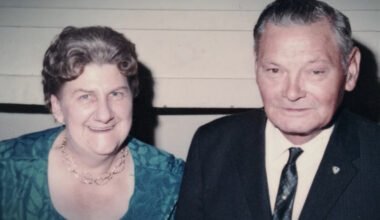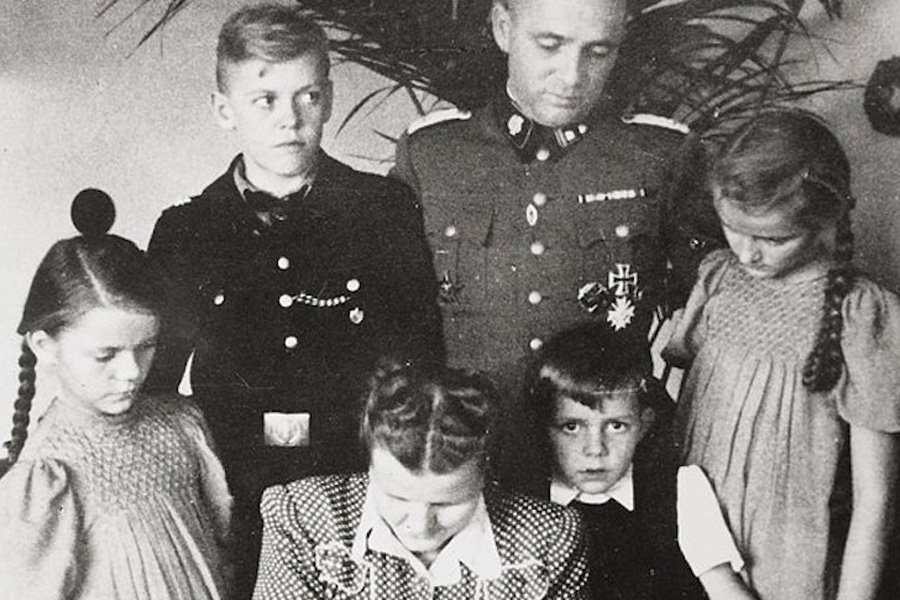
Basic Information
| Field | Details |
|---|---|
| Name | Hedwig Hensel (later often recorded as Hedwig Höss) |
| Born | 3 March 1908 |
| Died | 15 September 1989 |
| Nationality | German |
| Spouse | Rudolf Höss (married 17 August 1929) |
| Children | Klaus (1930), Heidetraud (1932), Inge‑Brigitt/Brigitte (1933), Hans‑Jürgen (1937), Annegret (1943) |
| Early Affiliation | Artaman movement |
| Residence (1940–1944) | Villa adjacent to Auschwitz concentration camp |
| Known For | Domestic role and family life beside Auschwitz during her husband’s command |
| Notable Postwar Event | 1946 disclosure of husband’s hiding place under pressure, leading to his arrest |
Early Life and the Artaman Connection
Hedwig Hensel’s formative years unfolded in a Germany convulsed by postwar hardship and rural romanticism. In the late 1920s she gravitated to the Artaman movement, a back‑to‑the‑land ideology that celebrated farm labor and “rooted” living. There she met Rudolf Höss, whose path would entangle her life with one of history’s darkest chapters. The rhetoric of soil and season, simple work and family, shaped their early bond—an ordinary romance set against extraordinary political tides.
Marriage and a Growing Household (1929–1943)
On 17 August 1929, Hedwig married Rudolf. A family soon grew around them with clockwork regularity: Klaus arrived in February 1930, Heidetraud in April 1932, Inge‑Brigitt (often known as Brigitte) in August 1933, Hans‑Jürgen in 1937, and the youngest, Annegret, in November 1943. These dates trace the arc of domestic life—birthdays, christenings, and first steps—cut into a period when Europe slid toward catastrophe. The household became its own universe, governed by routines and the small triumphs of childhood, even as their father rose through the SS.
A Villa at the Perimeter (1940–1944)
From 1940, while Rudolf served as commandant of Auschwitz, Hedwig managed the family home in a villa immediately beside the camp’s grounds. Gardens were tended. Rooms were furnished. Children played. The proximity to mass murder raises unavoidable questions about sightlines, sounds, smell, and silence. If a family home is a sanctuary, this one sat on the edge of a man‑made abyss. Daily life continued—meals prepared, birthdays marked—yet the villa’s domestic rhythms were inseparable from the machinery next door. The ordinary and the unspeakable lived as neighbors.
War’s Collapse and Difficult Choices (1944–1947)
As the war recoiled upon Germany, the Höss household was uprooted. Rudolf slipped into hiding under a false identity. Hedwig and the children were eventually located and questioned by Allied authorities. In 1946, under pressure that included threats against the family, Hedwig disclosed her husband’s hiding place. He was arrested the same year, tried, and executed on 16 April 1947 in Poland. These dates are stark, the ledger of choices in a crumbling world: concealment, discovery, trial, finality.
Aftermath and Later Years (1948–1989)
Widowed and forever attached to a name that history would not release, Hedwig lived out her remaining decades away from public forums. Her children dispersed along different paths—some changed continents, some changed names, all lived with a past that often arrived unbidden. She died in 1989. In the decades between, she remained less a figure of public record than a point of inquiry whenever historians, journalists, and descendants asked the same difficult questions: what was known, what was believed, and how did a family make a life beside the machinery of annihilation?
Family Tree Snapshot
| Name | Relation | Birth | Notes |
|---|---|---|---|
| Hedwig Hensel | Mother | 1908 | Later known as Hedwig Höss; household manager during Auschwitz years |
| Rudolf Höss | Spouse | 1901 | SS officer; Auschwitz commandant; executed 1947 |
| Klaus Höss | Son | 1930 | Eldest child; later lived abroad |
| Heidetraud (Heidetraut) Höss | Daughter | 1932 | Second child |
| Inge‑Brigitt (Brigitte) Höss | Daughter | 1933 | Gave rare interviews later in life |
| Hans‑Jürgen Höss | Son | 1937 | Fourth child |
| Annegret Höss | Daughter | 1943 | Youngest child |
Timeline Highlights
| Date | Event |
|---|---|
| 3 Mar 1908 | Birth of Hedwig Hensel |
| Late 1920s | Participation in Artaman movement; meets Rudolf Höss |
| 17 Aug 1929 | Marriage to Rudolf Höss |
| 1930–1943 | Birth of five children at two‑ to four‑year intervals |
| 1940–1944 | Family resides in villa next to Auschwitz while Rudolf commands the camp |
| 1946 | Hedwig discloses Rudolf’s hiding place under pressure; he is arrested |
| 16 Apr 1947 | Execution of Rudolf Höss in Poland |
| 15 Sept 1989 | Death of Hedwig Hensel |
Domestic Life and Moral Distance
To write about Hedwig is to step into the fog between walls and wire. A mother bought linens, trimmed roses, and taught children table manners while trains crossed the horizon. That juxtaposition—porcelain and ash—engulfs any attempt at portraiture. The villa’s domestic concerns never canceled the geography around it; rather, they defined an uneasy coexistence that still unsettles. In this space, numbers—1930, 1932, 1933, 1937, 1943—are birth years, but they are also coordinates on a map stitched to a camp’s perimeter.
Children, Memory, and the Weight of Names
The Höss children carried a surname that could not be shed, even when oceans intervened. Some granted interviews in late adulthood; others receded. Memory is not an archive so much as a weather system: it shifts, obscures, reveals, and often protects. In narratives about their childhood, the villa appears as a domestic island surrounded by a sea of brutality. Hedwig’s role as mother is unambiguous; her knowledge, her beliefs, and her private justifications remain debated terrain. The family’s later decades—work, marriages, relocations—unfolded under the long shadow of a father’s crimes.
Echoes in the Present
In recent years, renewed attention has returned to the villa and to the figure of Hedwig Hensel. Films and public discussions have asked the old questions with new urgency: how does ordinary life persist beside institutionalized murder, and what counts as knowledge in such proximity? The house itself, once a stage for domestic routines, has become an object of education and debate—an architectural witness to everyday rituals performed in the presence of catastrophe. Hedwig’s name, by extension, remains a touchstone for those exploring complicity, silence, and the boundaries of home.
FAQ
Who was Hedwig Hensel?
She was the wife of Rudolf Höss and the mother who managed the household in a villa adjacent to Auschwitz during his command. Her life is documented mainly through family records and historical accounts.
When did Hedwig marry Rudolf Höss?
They married on 17 August 1929 after meeting through the Artaman movement. The marriage produced five children.
How many children did they have?
They had five: Klaus (1930), Heidetraud (1932), Inge‑Brigitt/Brigitte (1933), Hans‑Jürgen (1937), and Annegret (1943). The births trace the family’s growth across turbulent years.
Where did the family live during the Auschwitz years?
From 1940 to 1944 they lived in a villa immediately next to the Auschwitz camp. The home’s proximity shapes all discussions of the family’s wartime life.
Did Hedwig help authorities find Rudolf after the war?
Yes, in 1946 she disclosed his hiding place under pressure, which led to his arrest. He was executed the following year.
Did Hedwig Hensel have an independent public career?
No, she is primarily known for her domestic role and family life; there is no record of a separate public career. Her historical presence centers on the household beside Auschwitz.
When did Hedwig Hensel die?
She died on 15 September 1989. Her later life remained largely private.