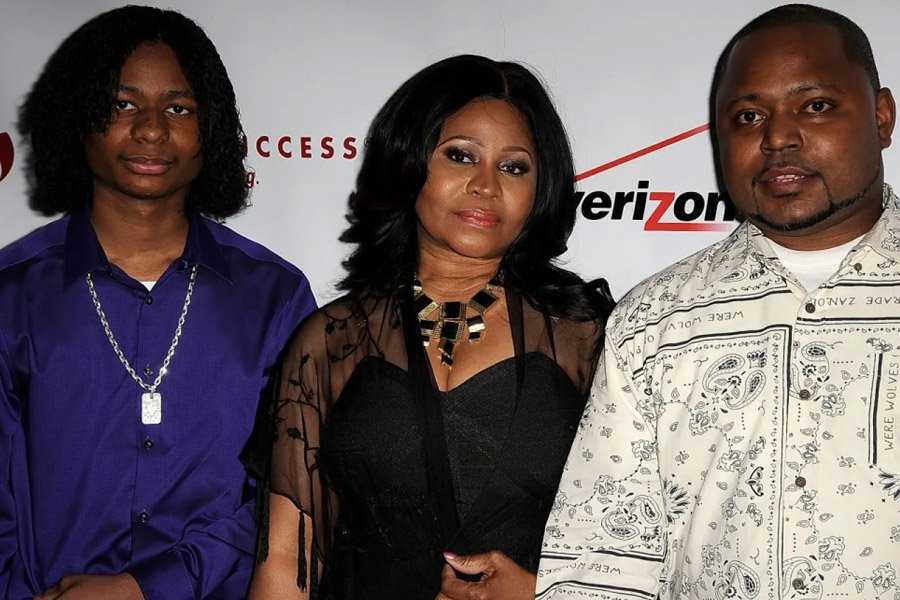
Basic Information
| Field | Detail |
|---|---|
| Full name (as publicly reported) | Jaqueline Maraj |
| Also reported as | Jacqueline Maraj; Jacqueline Robinson |
| Publicly known for | Appearances in news coverage connected to the criminal case of ex-husband Jelani Maraj |
| Relationship noted in reporting | Ex-wife of Jelani Maraj; mother of the child at the center of the case |
| Key public timeline | 2015 (case enters public view); 2017 (guilty verdict); 2020 (sentencing coverage) |
| Role in proceedings | Witness who denied extortion claims raised in court |
| Children | One child referenced in court coverage; identity protected |
| Profession (publicly verifiable) | Limited verified public detail; outside of court coverage, she maintains privacy |
| Public visibility | Primarily tied to court and news reporting, not to entertainment or public-facing work |
A life pulled into headlines
Some people seek the spotlight; others are pulled into it like a swimmer caught in an unexpected riptide. Jaqueline Maraj belongs to the latter group. Her public story runs alongside—rather than apart from—the highly publicized criminal case against her then-husband, Jelani Maraj, which drew widespread attention between 2015 and 2020. The gravity of those proceedings, and the celebrity-adjacent context that surrounded them, made her name appear in headlines and court reports even though she was not the defendant.
From the moment the case became a matter of record, coverage cast Jaqueline in roles that news consumers rarely forget: spouse, mother, witness. Yet outside those functional descriptions, there is little in the way of a conventional public biography—no sweeping profiles, few interviews, and no curated media persona. What emerges instead is a silhouette: a person defined publicly by a legal storm and the protective boundaries that understandably surround a minor.
Family ties in public view
Family connections explain why her name traveled so far, so quickly. Jelani Maraj’s familial link to a famous recording artist placed a national lens over a local criminal case, turning each court date into a headline and each filing into an alert. Within that vortex, Jaqueline was identified as Jelani’s wife (later ex-wife) and as the mother of the child central to the case. The press referenced these ties not because she sought publicity, but because those ties formed part of the courtroom narrative the public needed to understand.
That same attention also pushed journalists—and readers—to navigate ethical terrain. Stories could not ignore the family link that amplified public interest. At the same time, responsible coverage limited identifying details about the child and focused on facts entered into the record.
In the courtroom (2016–2017)
Courtrooms are theaters of law, not of spectacle, yet the atmosphere around this case inevitably blended both. During proceedings leading up to the 2017 verdict, Jaqueline appeared in coverage as a witness. One recurring point reported from the courtroom involved defense suggestions of an attempted extortion. In testimony, she denied those claims. This courtroom exchange became a touchstone in media recaps, as reporters summarized the prosecution’s case, the defense strategy, and the testimony that jurors heard.
Crucially, the legal spotlight pointed elsewhere: she was not charged. Her function in the public narrative was narrower and more constrained—testify when called, answer questions, maintain protections around a minor’s identity, and return to private life once the proceedings moved past her.
After the verdict (2018–2020 and beyond)
The case culminated in a 2017 guilty verdict and drew additional coverage around sentencing in 2020. In the months and years after, the news cycle shifted to appeals, procedures, and routine post-verdict updates. Jaqueline’s public presence, such as it was, faded as the story’s focal point moved from testimony to paperwork. This is often how it goes when the cameras leave: people whose lives were temporarily projected onto the public screen slip back into their routines, carrying experiences that the rest of us only encountered as headlines.
There is scant reliable public information about Jaqueline’s professional path or personal milestones outside the context of the case. Occasional references to versions of her name exist, but they do not coalesce into a verifiable, comprehensive biography. In this sense, the public record respects a boundary: the matter-of-fact details of a court case enter the archive, while the broader human story remains largely—and appropriately—her own.
Name variations and record-keeping
Public records and reporting sometimes capture people in fragments. In coverage of this case, her name appears as “Jaqueline Maraj,” “Jacqueline Maraj,” and “Jacqueline Robinson.” Variations like these are common in court filings, wire-service rewrites, and fast-moving newsrooms. They can reflect marital changes, preferred spellings, or simple copy discrepancies. The overlap of these names across the same set of events, dates, and roles strongly indicates they refer to one person as identified in court reporting: Jelani Maraj’s former wife and the mother who testified.
Public timeline at a glance
| Year | Event (publicly reported) |
|---|---|
| 2015 | The case enters public view; news outlets begin sustained coverage referencing family context and relationships. |
| 2016 | Pre-trial activity and court appearances draw periodic local and national reporting. |
| 2017 | Guilty verdict reported; witness testimony, including Jaqueline’s denial of extortion claims, is summarized in coverage. |
| 2018–2019 | Post-verdict motions and procedural updates keep the story in the news at intervals. |
| 2020 | Sentencing is reported; public attention begins to wane as the case transitions to the appellate and corrections phase. |
What remains private—and why that matters
The public’s perspective on Jaqueline is shaped by law, ethics, and restraint. Law defines what can be placed on the record; ethical journalism limits what should be amplified, especially when a child is involved. Restraint acknowledges that not every person swept into a headline is a public figure whose life requires excavation. Thus the record is both thin and clear: she is the ex-wife of the defendant, the mother of the child at the case’s center, a witness who denied extortion claims, and a person whose ongoing life remains largely beyond the scope of reliable reporting.
This boundary is not a void. It is a reminder that in criminal justice stories, many participants are private individuals. When the calendar flips from 2015 to 2017 to 2020 and beyond, their names may recede, but their lives continue—complex, untelevised, and deserving of the privacy they likely wanted all along.
FAQ
Who is Jaqueline Maraj?
She is publicly identified as the former wife of Jelani Maraj and the mother of the child at the center of his criminal case.
Is Jaqueline Maraj the same person as Jacqueline Robinson?
Yes, major reporting uses both names to refer to the same individual connected to the case.
What is her connection to a well-known music figure?
Her ex-husband is the brother of a prominent recording artist, which heightened media interest in the case.
Did she face any criminal charges?
No, she appeared in coverage as a witness and was not the defendant.
What did she say about extortion claims?
In courtroom testimony, she denied defense suggestions that she sought to extort anyone.
Are details about her child public?
Identifying details are not public; coverage protected the child’s identity, as is standard in such cases.
What is known about her career?
There is limited, verified public information about her professional life beyond her appearance in court reporting.
Where is she now?
Reliable outlets have not documented her current activities, reflecting her return to privacy.