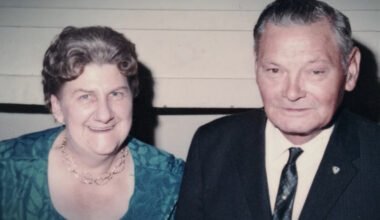
Basic Information
| Field | Details |
|---|---|
| Full Name | Langdon Doyle Bates |
| Birth | c. 1900–1901, Tennessee, United States |
| Death | March 6, 1989, Tennessee, United States |
| Occupation | Mechanical Engineer |
| Spouse | Bertye Kathleen Bates (née Talbot; sometimes spelled Talbert) |
| Children | Mary Bates; Patricia Bates; Kathleen Doyle “Kathy” Bates (b. June 28, 1948) |
| Notable Relative | Finis L. Bates (1848–1923), attorney and author; paternal grandfather |
| Primary Residence/Roots | Memphis, Tennessee |
| Burial | Elmwood Cemetery, Memphis, Tennessee |
Early Life and Tennessee Roots
The name Langdon Doyle Bates reads like a family archive in a single line: the sturdy Anglo-Southern cadence, the middle name echoing older generations, the surname long tied to Memphis. Born around 1900–1901 in Tennessee, Bates came of age as the twentieth century unfurled at speed—automobiles multiplying, factories humming, and engineering moving from tinkerer’s bench to a formal profession.
His family roots reach into the post–Civil War South. Most notably, his father, Finis L. Bates (1848–1923), practiced law and famously published a controversial book about John Wilkes Booth. In that household, ideas and argument likely coexisted with the practical demands of work; it would not be surprising that Langdon gravitated to the clarity and discipline of mechanical engineering. He ultimately chose a life less public than his father’s, even as the family name remained part of Memphis’s civic memory.
Marriage and a Household of Three Daughters
Around 1932, Langdon married Bertye Kathleen Talbot (also seen as Talbert), a homemaker with roots reaching toward South Carolina. Together they raised three daughters—Mary, Patricia, and Kathleen. The youngest, born June 28, 1948, would become known to the world as Kathy Bates. The household described in later biographical sketches was ordinary in the best sense: a working father, a devoted mother, and daughters who grew up amid the cadence of Memphis life, the summers long and humid, the winters mild, and family rituals binding the years together.
In that setting, imagination and ambition found room. When Kathy Bates later recalled her childhood and her parents, she would often put her father’s profession—mechanical engineer—front and center, a shorthand for steadiness, problem-solving, and the quiet satisfaction of well-made work.
Workbench and Drawing Board: A Mechanical Engineer’s Career
Mechanical engineering in mid-century America was a vocation of precision and purpose. It was the era of slide rules, drafting boards, and parts catalogs; of production floors and repair shops; of turbines, boilers, and machine assemblies that transformed cities and industries across the South. While public records capture few specifics about Langdon’s employers or projects, the repeated references to his profession hint at the character of a life anchored by technical skill.
Engineers measure twice, cut once. They listen to the hum of a motor as if it were music, diagnose the offbeat, and find the fix. Those habits travel home with a person. In family lore, the engineer-dad often becomes the patient explainer, the careful planner, the one who brings order to chaos when a storm knocks out the power or a pipe complains. The fragments we have suggest exactly that kind of stability in Langdon’s household.
The Bates Lineage: From Finis L. Bates to Kathy Bates
Family trees have their own rings, and the Bates rings are distinctive. Finis L. Bates, the grandfather, left his mark as a Memphis attorney and author, weaving himself into the cultural history of the region. His son, Langdon, carried the name forward with a more private calling—engineering rather than courtroom debate or printed polemic. And then came Kathy Bates, whose acting achievements, from stage to screen, would shine the family name under a very different light.
The sequence underscores how American families often move across vocations generation to generation: law to engineering to the arts. It also emphasizes how place matters. Memphis—complex, musical, industrious—provides a backdrop for each chapter: a city of manufacturing and medicine, of blues and barbecue, of neighborhoods where families like the Bateses built their lives across decades.
Family at a Glance
| Name | Relationship | Notable Details |
|---|---|---|
| Bertye Kathleen (Talbot/Talbert) Bates | Spouse | Homemaker; married c. 1932 |
| Mary Bates | Daughter | Elder daughter |
| Patricia Bates | Daughter | Elder daughter |
| Kathleen Doyle “Kathy” Bates | Daughter | Born June 28, 1948; acclaimed actress |
| Finis L. Bates (1848–1923) | Father | Memphis attorney and author |
1
Timeline Highlights
-
- 1900–1901: Birth of Langdon Doyle Bates in Tennessee.
- Early 1930s (c. 1932): Marriage to Bertye Kathleen Talbot/Talbert in the Memphis area.
- 1940s: Arrival of three daughters—Mary, then Patricia, then Kathleen (Kathy) on June 28, 1948.
- 1950s–1970s: Family life in Memphis; Langdon’s ongoing work as a mechanical engineer during a period of regional industrial growth.
- March 6, 1989: Death of Langdon D. Bates; interment at Elmwood Cemetery, Memphis.
- 1990–1991: Kathy Bates rises to multinational acclaim; her father’s name enters broader public view chiefly through her biographies.
Memphis, Memory, and Resting Place
Elmwood Cemetery is one of Memphis’s historic touchstones, a green expanse where the city’s story is etched in stone. Langdon’s burial there in 1989 places him among generations of Memphians who built the civic fabric—its institutions, industries, and families. For those tracing kin and context, Elmwood connects Langdon’s private life to Memphis’s public memory. It is a fitting resting place for a man whose contribution was measured in solved problems, steady paychecks, and the arc of a family well raised.
A Father’s Influence on a Future Star
The world came to know Kathy Bates for performances that feel precision-crafted: a wrench turned just so, a line delivered with the economy of a perfect bearing. It’s tempting to see echoes of an engineer’s rigor in her work ethic and attention to detail. Langdon died in 1989, the year before Misery reached theaters, and two years before Kathy’s Oscar win—yet the scaffold of support he provided through decades had already done its quiet work.
What the Records Do—and Don’t—Reveal
Public documents confirm the essentials: name, approximate birth year, profession, marriage, three daughters, grandfather’s identity, death in 1989, burial in Elmwood. What they don’t reveal is equally telling. There are no newspaper headlines, no speeches, no splashy enterprises attached to his name. That absence frames the picture: a working professional who kept his focus on family and craft, the kind of man whose influence is rarely public but deeply felt by those closest to him.
FAQ
Who was Langdon Doyle Bates?
He was a Tennessee-born mechanical engineer and the father of actress Kathy Bates.
When was he born and when did he die?
Records place his birth around 1900–1901; he died on March 6, 1989.
Where is he buried?
He is buried at Elmwood Cemetery in Memphis, Tennessee.
What did he do for a living?
He worked as a mechanical engineer, a profession noted consistently in family biographies.
Who was his spouse?
He married Bertye Kathleen Talbot (also spelled Talbert in some records) around 1932.
How many children did he have?
Three daughters: Mary, Patricia, and Kathleen (Kathy).
Finis L. Bates was Langdon’s father and Kathy Bates’s paternal grandfather.
Did he live to see Kathy Bates become a major star?
He passed away in 1989, just before her breakout in Misery (1990) and her 1991 Academy Award.